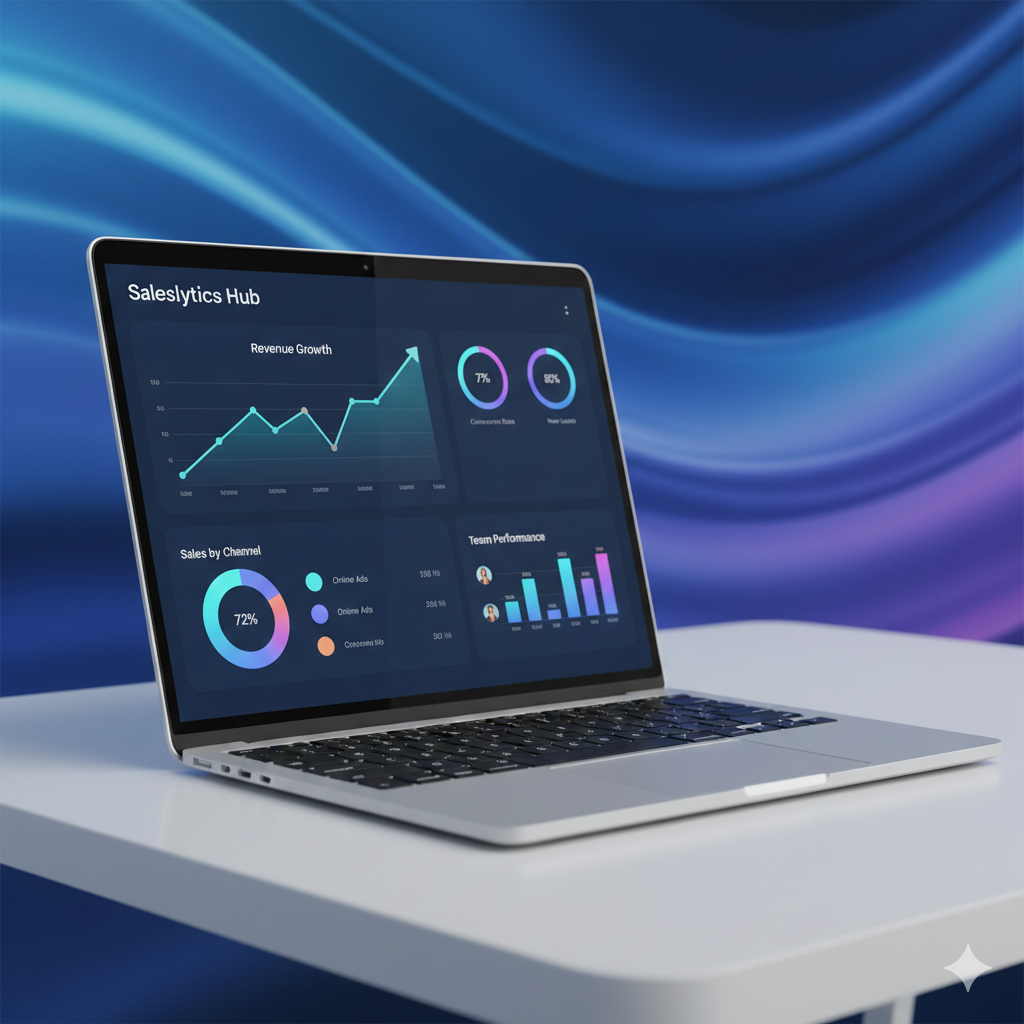
Modern businesses generate enormous amounts of data — website visits, email clicks, abandoned carts, conversion rates, and customer behavior patterns.
But raw data alone means nothing.
The real advantage comes from:
- Tracking customer journeys
- Identifying bottlenecks in the funnel
- Understanding buying behavior
- Optimizing based on performance metrics
Companies that implement structured analytics strategies often see:
- 25–35% revenue increase
- Improved customer retention
- Higher conversion rates
- Better ROI on marketing spend
📈 5 Proven Sales Analytics Strategies
1️⃣ Track the Right KPIs
Focus on metrics that directly impact revenue:
- Customer Acquisition Cost (CAC)
- Lifetime Value (LTV)
- Conversion Rate
- Sales Cycle Length
Avoid vanity metrics that don’t drive decision-making.
2️⃣ Optimize Your Sales Funnel
Identify where users drop off:
- Landing page
- Checkout process
- Follow-up email stage
Small improvements at each stage can dramatically increase overall revenue.
3️⃣ Segment Your Customers
Not all customers behave the same.
Segment by:
- Demographics
- Purchase behavior
- Engagement level
- Traffic source
Personalized targeting increases conversions significantly.
4️⃣ Predict Future Revenue
Using historical data, you can forecast:
- Monthly sales
- Seasonal trends
- Product demand spikes
Predictive analytics reduces risk and improves planning.
5️⃣ Automate Follow-Ups
Automated CRM systems help:
- Recover abandoned carts
- Nurture leads
- Improve response time
- Increase repeat purchases
Automation = scalable growth.
🔍 The Saleslytics Advantage
At Saleslytics Hub, we focus on helping businesses:
✔ Understand their numbers
✔ Make smarter decisions
✔ Increase ROI
✔ Build predictable revenue streams
Data is not just information — it’s leverage.